A film review by Craig J. Koban January 2, 2012
WE BOUGHT A ZOO 
Benjamin: Matt Damon / Kelly: Scarlett Johansson / Duncan:
Thomas Haden Church / Robin: Jones Patrick Fugit / Dylan: Colin
Ford / Lily: Elle Fanning / Peter: Angus Macfadyen
Directed by Cameron Crowe / Written by Aline Brosh McKenna and
Crowe, based on the book by Benjamin Mee
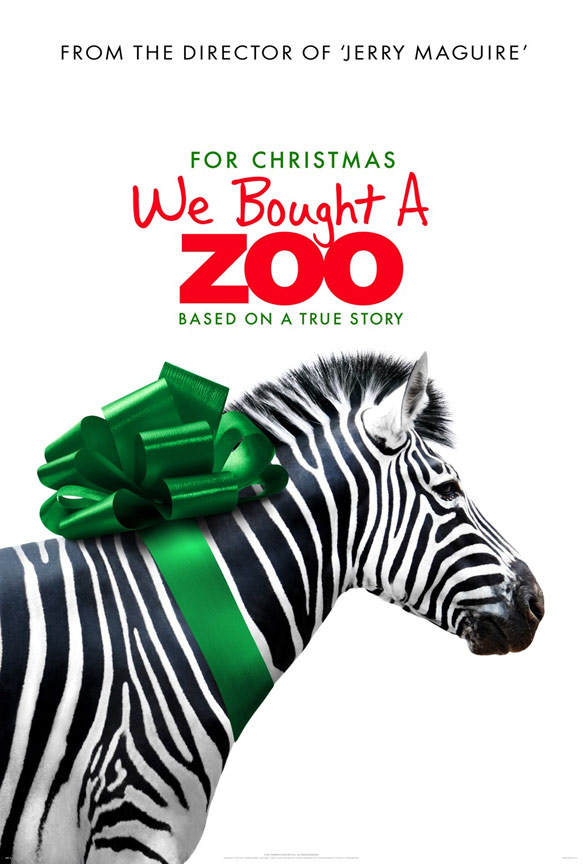 Cameron Crowe’s WE BOUGHT A ZOO is
a sweet and pleasing
film experience. It certainly
does not lack heart or compassion in the right places.
Cameron Crowe’s WE BOUGHT A ZOO is
a sweet and pleasing
film experience. It certainly
does not lack heart or compassion in the right places.
Yet,
the real problem with Crowe’s first feature film in six years (if you exclude
his Pearl Jam documentary) is that, despite its inherent warmth and
humanity, it just didn't feel dramatically genuine throughout.
It’s easy to label WE BOUGHT A ZOO as a feel-good family
drama, which it is, but it’s also mawkishly artificial and mechanically
written. It’s sad, because
there are some individual performances contained within that rise far
above the formulaic screenplay. WE
BOUGHT A ZOO, as a result, is nothing more than exemplary acted
Capra-corn.
I
know. I know. The
film is based on a true story, and if it weren’t then it would
have been an even larger pill to swallow and sit through for over two
hours. There is a man named Benjamin Mee, a former columnist for
The Guardian that decided to uproot his family and, yes, buy the rundown
Dartmoor Zoological Park in Devon, England that was on the verge of closure.
He would even go on to write a memoir about his exploits at the zoo.
So, the film version of this real story can’t really be
criticized for its improbability, but I can criticize the film for what
is, no doubt, a serious condensing of the established facts, done to the
point where your buy-in to the material begins to free fall.
Matt
Damon – understated and as dependably solid as ever – plays Mee in the film, and as
the story begins we see him as a recent widower that is now forced to deal
with being an only parent to his children: his seven-year-old daughter, Rose (Maggie
Elizabeth Jones) and his 14-year-old son, Dylan (Colin Ford).
Dylan is the real sullen problem child of the family and is
abruptly expelled from school for misbehavior.
Benjamin has had enough of his son’s antics and decides that
something drastic will need to be done in order to allow the whole family to
begin anew in the wake of his wife’s death.
Benjamin and his realtor begin scouting future homes, but Benjamin is
insistent on it being of the more countryside variety.
When they finally stumble on one bucolic property he is instantly smitten
with it, but there is a large catch: it also has a zoo in the backyard.
No
problem. Benjamin decides to
purchase it and quickly uproots the family to their new home, despite not
knowing anything in the way of zookeeping and handling. Benjamin’s young
daughter, though, is absolutely ecstatic about her new surroundings, but
Dylan just regresses back into moody solitude.
The zoo itself needs ample work, as it’s very rundown, but it is
loved and tended after by a loyal group, led by head zookeeper Kelly Foster
(Scarlett Johansson, who looks a bit like she just stepped off of a cover
girl, magazine photo shoot and put on some overalls). She believes that Benjamin is in over his head, which he
acknowledges, but he works diligently to make the zoo presentable for its
target opening day and the more time he spends with its eclectic group of
animals – ranging from lions, tigers, bears, exotic birds, and monkeys
– the more he grows to appreciate and love his new home. His son,
though...not so much.
|
|
I
really wanted to like this film.
Yet, it just posed far too many troubling questions about its
underlining story. I was left wondering how Benjamin was able to so easily
purchase a zoo despite knowing nothing about their day-to-day operations (in
real life, it took over two years to purchase it after much negotiation).
Then there are other nagging conundrums, like how Benjamin is so
easily able to quit his job and have enough capital to buy something as
relatively expensive as a zoo, not to mention how he has enough money to
pay for all of its expenses. There
seems to be very little, if any, inner conflict with the movie version of
Benjamin about his knee-jerk decision to leave his job, move to a zoo, and
in turn find a way to financially sustain his family in the long run.
These issues clearly must have gone through the real Mee’s mind, but in
the movie fantasyland presented here, Benjamin is so plucky, so optimistic, and so
headstrong that he barely gives it credence.
WE
BOUGHT A ZOO is also, as previously stated, awash in script
contrivances, some of which seem awfully convenient.
Take, for instance, a moment in the film when all financial hope
for Benjamin is gone, but then the script provides a convenient way of
providing instant cash funds to him via his dead wife’s safety deposit
box (he also never consulted it ever until the story required it). It’s also convenient how Benjamin’s son meets a very
cute, age-appropriate, and very available farm girl that resides near the
zoo to hook up with and thusly provide him with some emotional comfort. Then
there is the convenience of having the obligatory inspector (played well
by John Michael Higgins) that is, of course, a royal pain in the ass and
is in the story to provide some quick conflict.
Finally, there is also the convenience of having a zookeeper that
looks like Scarlett Johansson that is conveniently single and available, which means that
Benjamin and her, by default, will end up together.
Things
just have an annoying manner of being pieced together to flow from point a
to b in this screenplay, which makes We BOUGHT A ZOO feel too structured to be
considered a reasonable appropriation of the facts.
Crowe is a filmmaker that certainly has made a career of infusing
his films with a soulful sentimentality that rarely felt forced (see SAY
ANYTHING, ALMOST FAMOUS, JERRY MAGUIRE to name a few), but in WE BOUGHT A
ZOO he seems to lack his trademark discipline.
For example, he’s always been known as a director that makes
eclectic use of classic rock tunes to underscore key moments in the film,
but here they seem to be a bit too spot-on and obvious.
Too much of WE BOUGHT A ZOO feels mechanically constructed to
elicit an emotional response from viewers.
Of the positives, I will say this: Damon is thanklessly great as Benjamin, and his winning, disarmingly likeable, and quietly vulnerable performance helps to anchor the film down when it devolves in silly, dime-a-dozen clichés. Johansson – in spite of being a bit too attractive to be taken literally as a tomboy-ish animal handler that has trouble securing dates (yup, sure, uh-huh) - is unusually natural and effective here and maintains a nice chemistry with Damon, even though their relationship arc is achingly preordained. Lastly, a little Thomas Haden Church - who has a brief role as Mee’s brother - gives, as always, the film’s driest performance that scores huge laughs with the most throwaway of lines.
Mee may have indeed bought a zoo, but I just did not buy into the dramatized account of it here.
